
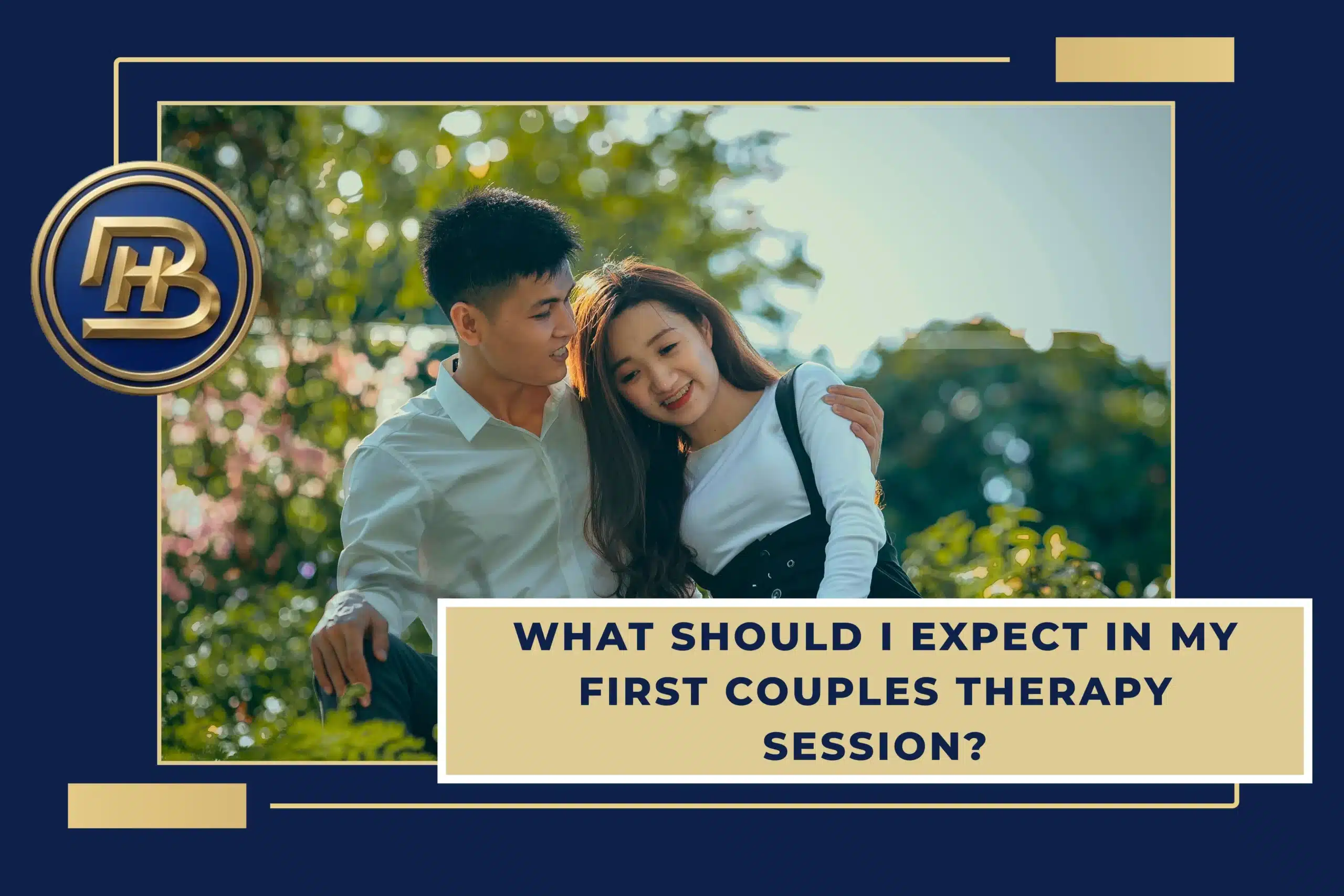
The first session of couples therapy typically involves introductions, a review of confidentiality, and a conversation about relationship history, current concerns, and goals for treatment. Most sessions run somewhere between 60 and 90 minutes, though some practices keep it closer to 75, and it’s common for that first meeting to focus more on gathering information than on solving problems right away.
Part of that first session also involves talking through any previous couples therapy experiences, what worked, what didn’t, and what may have actually made things worse. The last thing anyone wants is to walk back into a process that mirrors something that already failed the relationship once. So there’s usually a conversation about expectations for this next round, and what felt helpful or unhelpful in past attempts, before moving forward.
There’s almost always some nervousness that shows up before a first session, and honestly, sometimes that worry is fair. Not every couples therapist is trained to stay neutral, and some will unintentionally take sides if they’re not well-informed in the modality they’re using. A lot of people come in worried they’ll be unheard, made to feel like the one who’s always wrong, or that the therapist will end up validating a partner’s belief that everything is their fault. That happens more than people realize.
In emotionally focused therapy specifically, that dynamic isn’t the goal at all. The first session usually includes direct conversation about how this type of work isn’t about deciding who’s right or wrong, or who’s at fault. It’s about attachment, and what are sometimes called attachment injuries, moments where one partner needed something from the other and didn’t get it, and that unmet need is still shaping how they relate now. This kind of couples therapy is a process, not a courtroom, there’s no judge and no verdict being handed down.
What Is Couples Therapy?
Couples therapy, especially through the EFT model, positions the therapist as a process consultant rather than a referee. The work involves joining with both partners and helping them slow down enough to actually understand what’s happening inside each other, and ultimately how to be there for one another. Over time, as safety builds, partners learn how to ask for reassurance and closeness in ways that actually land.
What this looks like in practice is building what’s often called a secure base, sometimes creating a corrective experience that neither partner had growing up. The goal, particularly in EFT, is establishing safety first with the therapist, who models what that looks like, before partners start turning toward each other and eventually doing it on their own outside of session.
Naturally, people walk in nervous, there’s a lot on the line and nobody wants things to go worse than they already are. That means a fair amount of trust has to be extended to the therapist before the work can even really begin, and building that trust matters just as much as any technique used along the way.
How Does Couples Therapy Work?
The experience varies a lot depending on who’s leading it, but a skilled EFT therapist typically guides couples through a structured process of exploring emotions, feelings, and vulnerability underneath whatever’s happening on the surface. This model focuses on the cycle itself, how partners get pulled into it, how to prevent it, and ultimately how to build safety based on each person’s own history and where their patterns actually come from.
Couples who’ve been together for 10, 15, even 20 years are often surprised by what they learn, not just about their partner, but about themselves. There are frequently what feel like genuine “aha” moments, pivotal realizations where, had they known this information years earlier, their whole approach to each other would have looked different.
What’s the Difference Between the Gottman Method and Emotionally Focused Therapy?
The core difference comes down to this: one approach is more cognitive, the other is more process-based. Gottman leans on structured tools and, at times, worksheets, while EFT centers almost entirely on the attachment bond between two people. Research on EFT shows roughly 70 to 75 percent of couples moving from distress toward recovery (Wiebe & Johnson, 2016), and it tends to be the approach that produces a more durable bond over time.
It’s fairly common for couples to go through EFT first, establish that secure connection, and later choose to add Gottman-style skill-building once the underlying security is in place, though that sequence isn’t a strict rule by any means. EFT has grown more popular in recent years, but it also takes a genuinely skilled clinician to run it the way it’s designed to be run.
There’s an important distinction worth knowing here, plenty of therapists describe themselves as “EFT-informed,” but that’s different from being trained through ICEEFT’s official externship and core skills program. If working with an EFT specialist matters to you, it’s worth directly asking whether a therapist is ICEEFT trained or certified, rather than just informed by the model.
What Happens During the First Session?
Most therapists have already reviewed intake paperwork before the first session, though that documentation rarely tells the whole story. So expect questions like what the relationship looks like now, what you’d hope it could look like going forward, and what things were like before certain turning points, before kids, after kids, once extended family entered the picture. There’s a whole range of relationship-tracking questions aimed at understanding where things started, where they are now, and the peaks and valleys in between, including whether the difficult cycle showed up early on or got worse under specific stressors later.
Ultimately, the session is also about understanding what each partner hopes to get out of therapy, and that information shapes how the work moves forward together.
Many EFT therapists, this one included, tend to identify the negative cycle fairly early, or at least spot patterns connected to it, so there’s a working framework in place by the end of that first meeting. A lot of the early suggestions that come out of session one aren’t complicated techniques, they’re things like tracking the pattern, staying gentle, staying flexible, and extending real benefit of the doubt to a partner. The idea is recognizing that there’s likely something between two people that neither fully understands yet, and treating that unknown with patience rather than blame.
Part of that also means holding some compassion for the fact that neither partner necessarily received the kind of modeling growing up that would have taught them how to do this well. That’s not an excuse, it’s context, and building something better together becomes the actual goal.
What Topics Come Up in Couples Therapy?
The specific topics vary quite a bit depending on how long a couple has been together, sometimes there’s more ground to cover, sometimes less. Common themes include:
- Communication difficulties
- Trust and infidelity
- Parenting disagreements
- Financial stress
- Sexual intimacy
- Emotional disconnection
- External pressures from work or family
EFT therapists don’t just encourage these conversations, they model them directly in the room. That means demonstrating how to validate a partner, how to explore feelings alongside them, live, while the other partner watches and experiences that validation and connection happening in real time. It becomes something to essentially copy afterward.
Most of this isn’t a motivation problem, it’s a skills problem. Many people were simply never taught how to be vulnerable or talk about these things in ways that actually land with a partner, and that gap is often exactly what creates the cycle in the first place.
What Are the Stages of Emotionally Focused Therapy?
De-escalation is the first stage, and it often takes up roughly 70 percent of the total time spent in couples therapy. This stage tends to take the longest because there’s usually a lot of raw emotion present early on, and a fair amount of reframing work involved in helping both partners see that they aren’t each other’s enemy. That shift takes time to actually settle in, especially when people arrive carrying real hurt.
Anyone starting this process is generally encouraged to stay through that first stage as long as it takes, since it’s usually the hardest part and also where the most time gets spent. De-escalation essentially means gaining a clearer understanding of the negative cycle, reframing the idea that partners are working against each other, and learning to have real conflict without it completely blowing up.
That doesn’t mean conflict disappears entirely, it just becomes far less likely to end in screaming, yelling, or total withdrawal once a couple has moved through de-escalation. With a better understanding of what’s happening for each person, and what’s actually happening between them, the intensity tends to soften.
Restructuring interactions follows next. Partners begin sharing more vulnerable feelings and attachment needs they hadn’t voiced before, with the therapist guiding them toward responding with empathy instead of defensiveness, gradually building new patterns of connection.
Consolidation comes last, where couples practice these new ways of relating outside of session until they start to feel less like conscious effort and more like how things naturally work now.
Is Couples Therapy Effective?
Research consistently says yes, though outcomes depend heavily on both partners’ willingness to engage honestly. The American Association for Marriage and Family Therapy reports that over 98 percent of clients rate their therapy experience as good or excellent (AAMFT, 2019).
EFT in particular has a strong evidence base. Wiebe and Johnson (2016) found that 70 to 75 percent of couples moved from distress to recovery through EFT, with 86 percent showing significant improvement overall. Johnson et al. (1999) similarly found that couples completing EFT reported significantly higher relationship satisfaction and lower relapse rates compared to other therapy approaches.
The Gottman Method also shows strong outcomes, particularly for couples whose main struggle is communication rather than deep emotional disconnection (Gottman & Gottman, 2015). More broadly, Lebow et al. (2012) found positive outcomes in over 70 percent of couples across a range of therapy approaches, regardless of the specific method used.
Therapy can help couples:
- Reduce ongoing conflict
- Improve emotional intimacy
- Foster mutual understanding and empathy
- Heal from infidelity or past trauma
- Strengthen long-term commitment
Frequently Asked Questions
Is Couples Therapy Covered by Insurance?
Coverage varies quite a bit by plan. Some insurance covers couples therapy when billed under a mental health diagnosis like anxiety or depression, others don’t cover it at all. It’s worth calling your insurer directly and asking the therapist about billing options before the first appointment.
How Much Does Couples Therapy Cost?
Costs range fairly widely depending on location and therapist credentials. In the US, average session fees fall somewhere between 100 and 250 dollars (APA, 2023), but in high cost of living areas like in the Bay Area of California, prices can range from $300 and $400 per session.
If tension, disconnection, or repeated arguments have started to feel like the norm rather than the exception, working with a couples therapist at BalanceHour Therapy can help untangle what’s actually going on beneath the surface.