

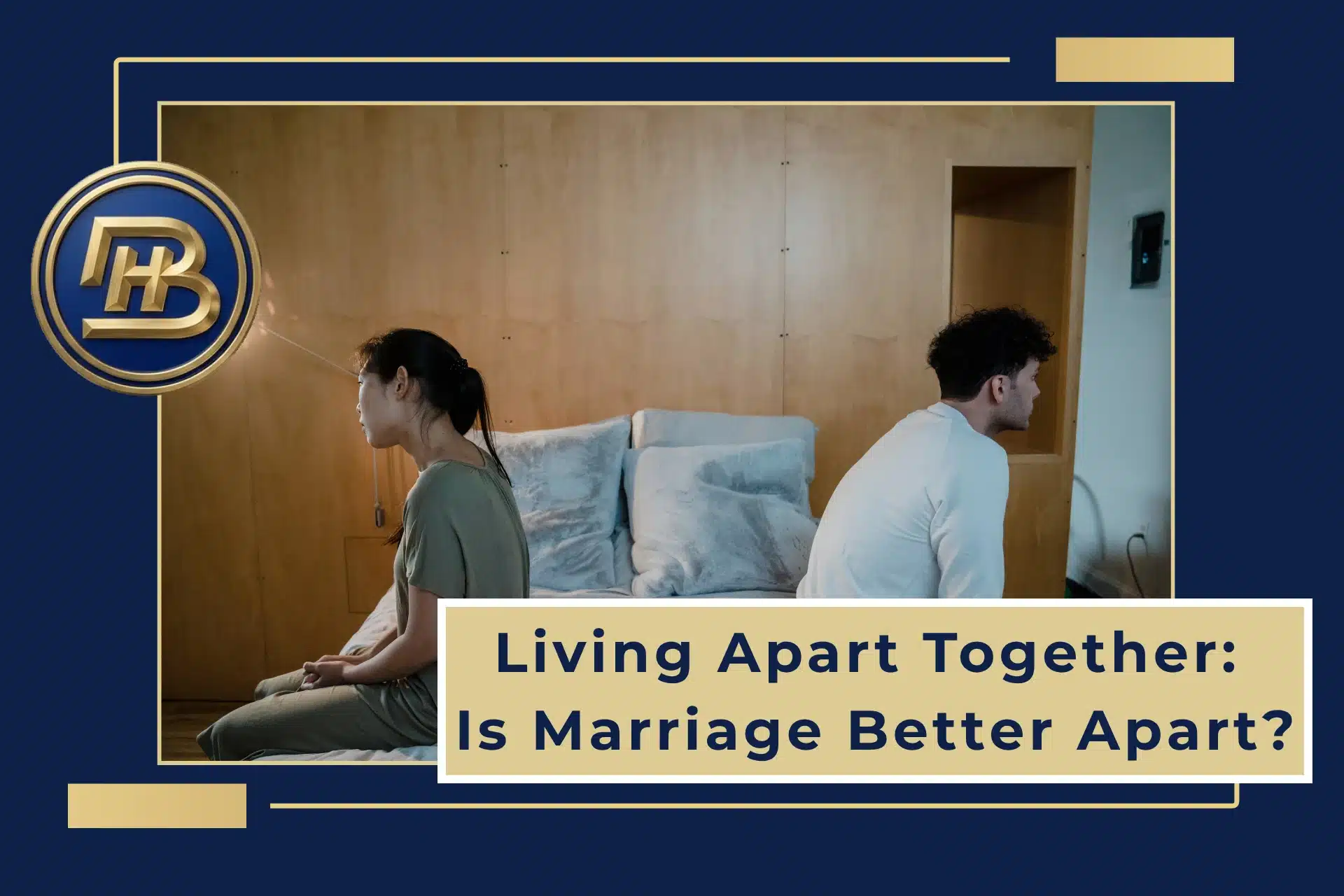
A recent New York Post article highlighted a trending and viral video of Marcela Hill claiming to have a better relationship with her husband now that they are living apart, under two separate households, and a mile from each other.
What is Living Apart Together?
Marcella’s story is a perfect example of a growing and hotly debated trend: “Living Apart Together” (LAT). While online commentators debate the genuineness of this post, or if it’s disrespectful to marriage, or if it’s heading towards divorce, the reality is much more complex. This nontypical setup can at times help couples from an attachment and nervous system perspective. Love can be understood and look different in various ways, including on a spectrum or in stages. Relationships are not always black and white or cut and dry models that we often see in movies or television.
Can Living Apart Be Better for Couples?
If we analyze this from an attachment-based perspective, then the arrangement could be beneficial as follows:
- “Pursue-Withdraw” Gets Reduced
When couples live together, they can fall into a painful cycle of repetition where one partner chases or pursues the other (usually though protesting, poking, prodding, blaming, and other reassurance-seeking behaviors) while the other pulls away (usually through stonewalling, avoiding, defending, or escaping conflict). By separating households, you remove the daily triggers that can lead both people into this dynamic, which includes disagreements or conflicts around chores, dishes, laundry, pumping gas, and other domestic expectations. These triggers can set off the negative cycle of pursue and withdraw, which can lead to disconnect. Sometimes, partners decide to live separately because of the pain that this cycle causes. Living separately could be an advantage at times because it allows partners to work on individual-related relationship issues when they’re not together, rather than retriggering each other’s nervous systems over and over when under the same roof. Marcella’s statement that her body “was not constantly physically tense anymore” is a textbook description of a nervous system shifting out of chronic threat mode and returning to a state of emotional safety.
- Both Couples Are Seeking Independence
This example may work best for two very independent people who require similar amounts of autonomy and like to do things their own way. This does not necessarily mean the end is near, rather it could be a temporary stage or transition period. We see this a lot in careers that require intense focus, in children with mixed families moving into different stages of life, or in families separated by distance and spouses needing to travel separately to fulfill family obligations for both sides. Living apart in such circumstances can enable both partners to flourish as individuals without compromising the bond when ideas, career growth or personal energy needs to be focused elsewhere.
- Couples Want to Increase Longing for Eachother
Living apart requires significant foundations of trust. The emotional connection can be very strong even if you’re physically apart, because you’re still talking, checking in, and communicating actively. Also, it can be good to have time apart to remind partners what it feels like to miss each other and to rekindle that healthy sense of longing that often gets lost in conflict and living together for so long.
Does Living Apart Mean Slow Divorce?
As a couples therapist, the meaning of this arrangement is most important because we have to evaluate the motivation for the distance:
Couples who are secure while living apart: When distance is a negotiated and mutually-agreed-upon strategy to minimize conflict at home and to honor each person’s individual needs, it can enhance the connection. As life circumstances change, couples’ living arrangements may naturally readjust to a shared household over time.
Couples who are avoidant while living apart: If the separate living spaces are being used to avoid healing deep emotional wounds, past betrayals, or a fear of vulnerability, then the arrangement can be a very sophisticated form of avoidance and retreat. Without actively working on the relationship’s core issue of safety and vulnerability, physical distance could turn into emotional disconnect and ultimately detachment.